What to Expect at Your Child's First Play Therapy Appointment at Bud to Bloom
You have done the research, made some calls, and now the appointment is on the calendar. First of all, that took courage and we do not take that lightly. Getting to this point is a big deal. Your child's first play therapy appointment at Bud to Bloom in St. Louis is designed to feel as easy and low-pressure as possible, for both of you. Here is exactly what to expect.
What happens before you even walk through the door?
Before your child ever sets foot in the playroom, you will have already gone through two important steps with our team.
First, our free consultation call. This is a 15 to 20 minute conversation with our client care team (not the therapist just yet) where we gather some initial information, answer your questions, and figure out which of our therapists is going to be the best fit for your family. No paperwork, no pressure, just a real conversation to help us get to know you a little.
Then comes what we consider one of the most important parts of the whole process: your parent intake. This is a 60-minute session with your child's therapist, and here is the key part — your child is not there. This is parent-only time, on purpose.
We want you to be able to talk freely. Really freely. Without watching what you say, without wondering what your child is picking up on, without editing yourself for the audience. You can get into the real details of what has been happening, what you are worried about, what you have already tried, what your child is like when things are hard and when things are good. All of it.
That session is foundational. It gives your child's therapist a full, honest picture before they ever meet your child, which means they are not starting from zero on day one. They are starting from a place of real understanding. We think that matters a lot.
You do not need to have everything figured out before you reach out either. A lot of the families we work with come to us saying something like "I know something is off but I am not sure exactly what." That is completely fine. Figuring it out together is genuinely part of the process.
If you are still in the "should we?" phase, our free consultation is the lowest-stakes first step there is. No commitment, just a conversation.
What does the first appointment actually look like?
When your child arrives at our St. Louis office for their first session, their therapist will greet them warmly and the two of them will head into the playroom together. The first session is really about helping your child feel safe, seen and understood.
Most of our therapists use child-centered play therapy, an evidence-based approach where your child gets to lead. I know, I know. That sounds a little counterintuitive. You might be thinking "Wait, the child leads? But my child is the one who needs help." I completely understand that reaction and I promise I am not just saying that.
Here is the honest truth: in my ten years of doing this work, I have seen child-centered play therapy work with kids dealing with anxiety, trauma, big behaviors, attachment wounds, grief, divorce, social struggles, and more. It works. Not because it is magic, but because it is built on something really powerful, which is trust and relationship.
When children feel genuinely safe and accepted exactly as they are, they show us what they need. Play is their language. A child who will never say "I feel scared and out of control" will absolutely show you that through what they choose in the playroom and how they play with it. Our therapists are trained to hear that language, to notice the themes, to sit with the child in a nonjudgmental, fully present way, and to respond in ways that help the child feel understood and accepted. That is where healing starts.
The first session will likely look like your child exploring the playroom, checking things out, and figuring out what they want to do. Their therapist will be right there, warm and unhurried, following their lead and getting to know them. It probably won’t look like what you picture when you hear the word "therapy." That is completely okay. Because play is never just play. It is always communication.
If you want to go deeper on why this approach works, our post on what makes child-centered play therapy unique is a great read.
What should my child wear and how do I prepare them?
This is genuinely one of my favorite things to tell parents because it is so easy. Dress your child in clothes they can play in. Comfortable, nothing precious. We have sand trays, paint, puppets, building blocks and more in the playroom and we want kids to feel totally free to get into it.
As for talking to your child about the appointment, we have a whole post on how to talk to your child about starting play therapy if you want the full version. The short version: keep it simple, honest, and low-key. Something like "We are going to meet someone whose job is to play with kids and help them with their feelings" usually lands really well. Try not to build it up too much in either direction.
One thing we gently encourage: try not to interview your child on the way home. We know that is hard because you care and you are curious and you want to know everything. But giving them space to share what they want to share, on their own timeline, tends to go much better than "So what did you do? What did you talk about? Do you like her?" If they want to tell you, they will.
What if my child is nervous or does not want to go?
So normal. We hear this all the time and we promise it does not mean this is the wrong choice.
A lot of kids are hesitant at first, especially if they have never done anything like this before. Some warm up in the first five minutes. Others take a few sessions to really settle in. Your therapist is not going to push or force anything. The whole foundation of child-centered play therapy is that your child gets to move at their own pace in a space where they feel safe and unjudged.
If your child is anxious about it, try to stay calm and confident yourself. Kids pick up on our energy more than we realize. A relaxed reflection of the feeling "this is a new place, you’re a little nervous" goes a really long way.
And if they come out and say they do not want to go back, bring that to the therapist. It does not automatically mean we stop. It usually means something came up that is worth talking about and making a plan around.
Ready to take the next step?
If you have been on the fence, this is your sign. Fill out our free consultation form and a member of our Bud to Bloom team will be in touch to answer your questions and help you find the right fit. No pressure, no commitment, just a real conversation about your family.
What happens after the first session?
After that first appointment your child will come back the following week and things start to build from there. After a few sessions your therapist will connect with you for a parent session.
Now here is something we want to be upfront about because we know it surprises some parents: your child's therapist is not going to give you a full rundown after every session. That is completely intentional.
Think about it this way: how easy would it be for you to open up in therapy if you knew someone was getting a full debrief right after? Exactly. Kids deserve the same thing. We want your child to trust that their session is their space, not a reporting back to mom and dad. That trust is actually part of what makes the work possible.
So here is how we handle it instead. Each week we give you a brief check-in form, while you are in the waiting room, where you can share how things have been going at home. If you want to connect with the therapist, just let us know in the form and they will reach out to set up either a quick 15-minute parent consultation or a fuller parent session depending on what you need.
In our regular parent sessions, which we like to have every few sessions, your therapist will share themes and patterns they are noticing in your child's work. You will get a real sense of where things are without us breaking what your child has shared in confidence. You stay connected and informed. Your child keeps their safe space. Everyone wins.
We are big believers that supporting children means supporting caregivers too. You are a partner in this work, not a bystander.
How will I know if it's working?
This is the question every parent wants answered and I want to be honest: we cannot promise a specific timeline. Every child is different and every family's situation is different.
What I can tell you is that child-centered play therapy is an evidence-based approach with decades of research showing it is effective for a wide range of concerns, from anxiety and big behaviors to trauma and social struggles. You can read more about how play therapy works and why it helps children heal if you want to dig into the research side.
What most families notice over time, sometimes slowly and sometimes in little surprising bursts, is that their child starts to feel a little more like themselves. A little more regulated. A little more connected. And those shifts tend to ripple outward into the whole family.
We will be with you every step of the way.
FAQ
What is the difference between the consultation call and the intake?
The consultation call is a free 15 to 20 minute conversation with our client care team. It is how we get to know your family a little, answer initial questions, and match you with the right therapist. The intake is a separate 60-minute session with your child's actual therapist, and it is parent-only. No child present. That is your time to get into the real details so your therapist has a full picture before ever meeting your child.
How long is a play therapy session at Bud to Bloom?
Sessions are 45 minutes. The playroom is set up and ready, your child's therapist is there and unhurried, and that 45 minutes is entirely theirs.
Should I stay during my child's session?
In most cases your child will go in with their therapist on their own. This helps your child build their own relationship with the therapist and feel free to be themselves. Your therapist will keep you connected through the check-in form, parent consultations, and regular parent sessions.
What if my child refuses to go into the room without me?
It happens and your therapist knows how to handle it with warmth and patience. They may invite you in briefly at first or take a little extra time in the waiting area to help your child feel comfortable. We meet kids where they are.
How do I get started?
The easiest first step is to fill out our free consultation form. Someone from our team will reach out, get to know your family a little, and help you figure out the right fit.
About the Author!
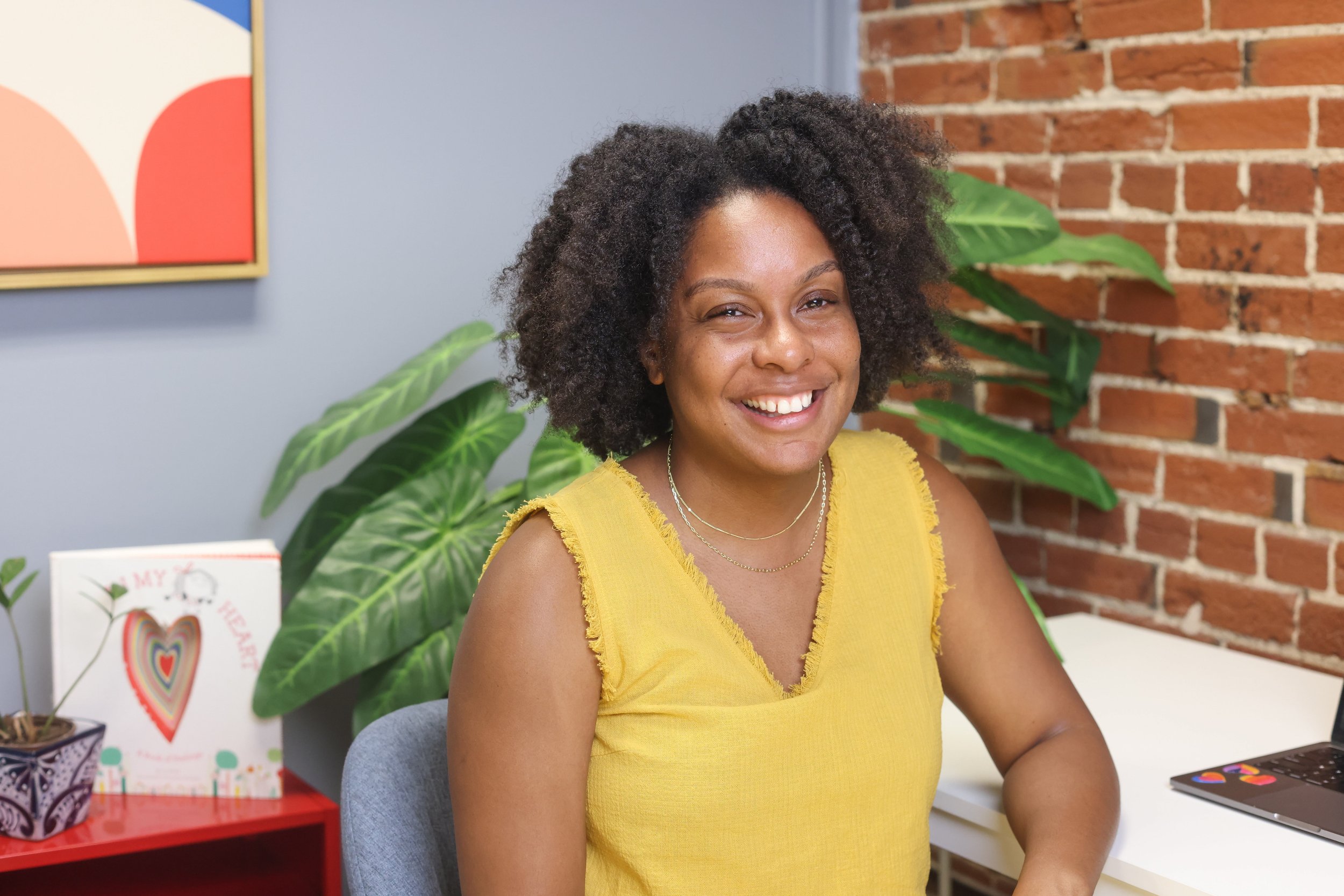
Jasmine Berger, LCSW RPT-S is a registered play therapist supervisor and founder of Bud to Bloom Play Therapy in St. Louis, Missouri. She and her team specialize in helping children, teens, and families feel more connected, more regulated, and more like themselves. Learn more about the team here.