

Where play heals and gives kids tools to thrive!
Pediatric Therapy in St. Louis
No parent wants to hear that there’s something wrong with their child—which is why we would never say that.
At Bud to Bloom Play Therapy, we believe that big behaviors are a child’s way of telling us what they really need - especially when they don’t have a way to tell us in words.
Your child isn’t “broken,” and neither are you. But hard times are, well, hard—and we’re here to support your family through it.
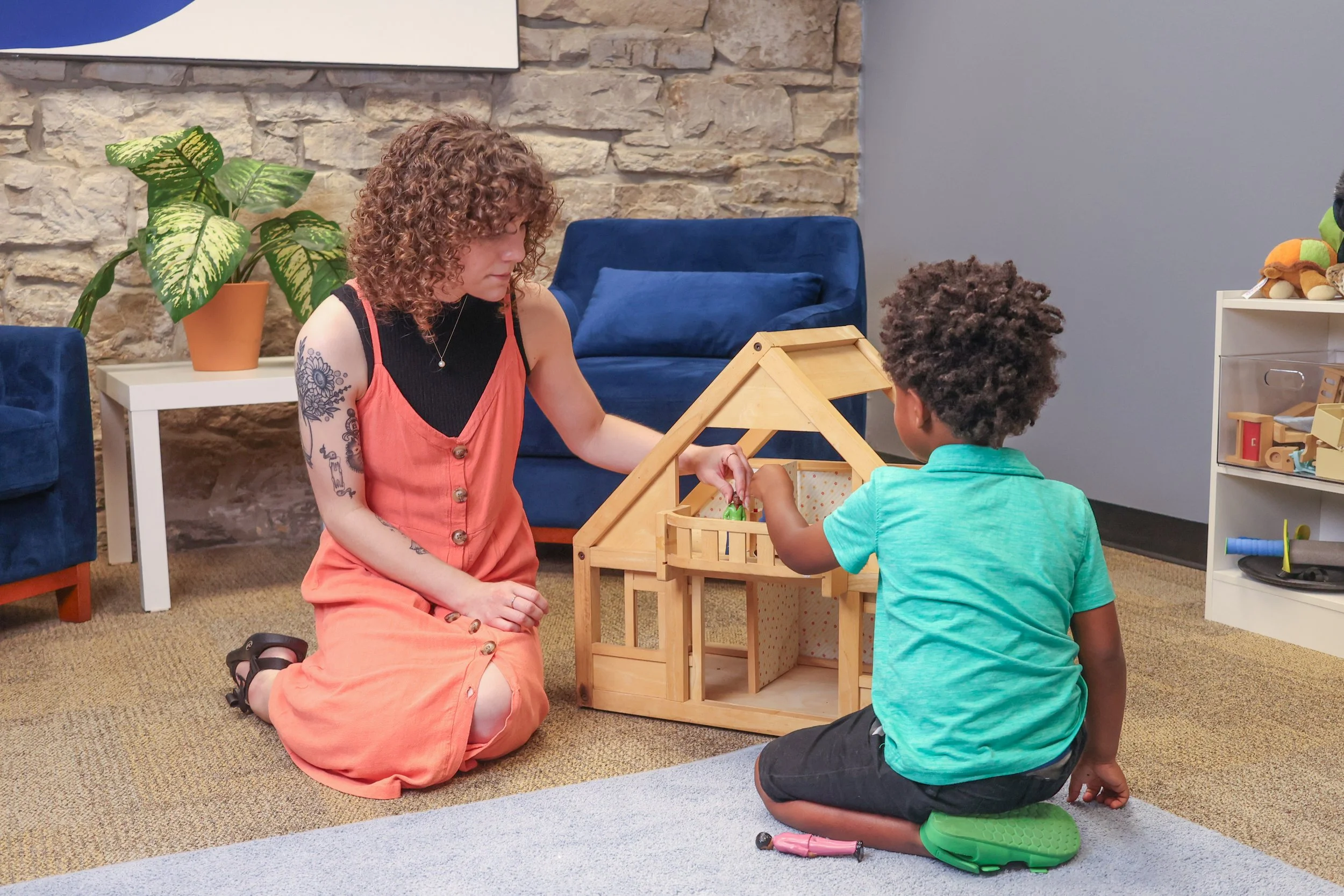
The Power of Play Therapy
Play provides an avenue for children to communicate with us in their own language—which makes it a powerful processing tool for pretty much anything they’re going through.
Through play, children can communicate experiences and emotions that might be difficult to describe with words, leading to healing and emotional growth.
Play therapy also gives your family strategies and insights to support your child at home, and a healthier family life.


Play Therapy Can Help With…
Moving Through Big Feelings & Behaviors
Processing Childhood Trauma
Navigating Foster & Adoptive Family Dynamics
Navigating Life Transitions


"You deserve support that feels like hope, not pressure."
A clear path — not a confusing process.
Reach out:
Give us a call or click the link below to schedule a call with one of our Client Care Coordinators.
We’ll spend 15-30 minutes learning about your family’s situation and needs, sharing about our services, and either scheduling you with one of our child therapists, or connecting you with more appropriate resources.
Meet Your Child Therapist:
Your first session is a 60-minute block with your new therapist. You’ll discuss your child’s background, strengths, and current needs. We’ll cover expectations, policies, and the first steps of establishing a treatment plan for your family and child.
Watch Your Child Bud & Bloom:
Begin with weekly sessions using the approach your therapist recommended. This may mean family therapy, parent support, individual therapy, or a mixture of these approaches.
Unlike other medical treatments, therapy doesn’t have a fixed timeline, and depends on your child’s specific needs. However, most clients remain with us between 8-12 months. Your therapist will keep you updated on progress every step of the way!
Outgrowing our Garden (AKA Discontinuing Services):
As you and/or your therapist sees progress toward your original goals, we’ll begin conversations around graduation from therapy.
We understand that therapy often becomes a special place to children, so we usually give a 3-week notice to support this transition. When we discuss ending therapy, some kids may have big feelings, and you may even see some regression. Rest assured this can be a normal part of the process.
Together with your therapist, you will choose an ending day for therapy. The therapist and child will choose how to spend that last session in a way that honors the child’s work and progress. Every termination is always a “good bye for now,” as we have an open-door policy and always welcome back previous clients if they find themselves needing support in the future.
Bloom Together Pricing:
A Shared Care Model
Our Bloom Together Pricing model is built on a simple truth: families are in different financial seasons.
In order to ensure the most focused care for our families through a smaller caseload for each provider, we are not in-network commercial insurance plans.
We accept credit cards, debit cards and HSA/FSA. Many of our families have success with applying for out–of-network reimbursement for our services! Learn more here.
For information about Good Faith Estimates, click here.

Supported Season:
$75 PER SESSION
Some families are in seasons where they need reduced fees to access care. We have limited spots available for this season, and families will pay $75 per session.
Sustaining Season:
$150 PER SESSION
Others may be in a stable place and able to pay our standard rate $150.
Generative Season:
$200 PER SESSION
And some may have additional capacity to give forward, helping expand access for others in our community ($200).
*Please note that our 1-hour long parent/caregiver intake sessions are billed $25 more than your usual rate, to account for the longer session. This means intakes cost $75 for our Blooming Season, $100 for our Supported Season, $175 for our Sustaining Season, and $225 for our Generative Season.
Instead of a single flat fee, we invite clients to choose the rate that fits their current reality. Higher-tier contributions can support access to therapy for families who otherwise might not be able to afford care with us.
This isn’t charity — it’s redistribution.
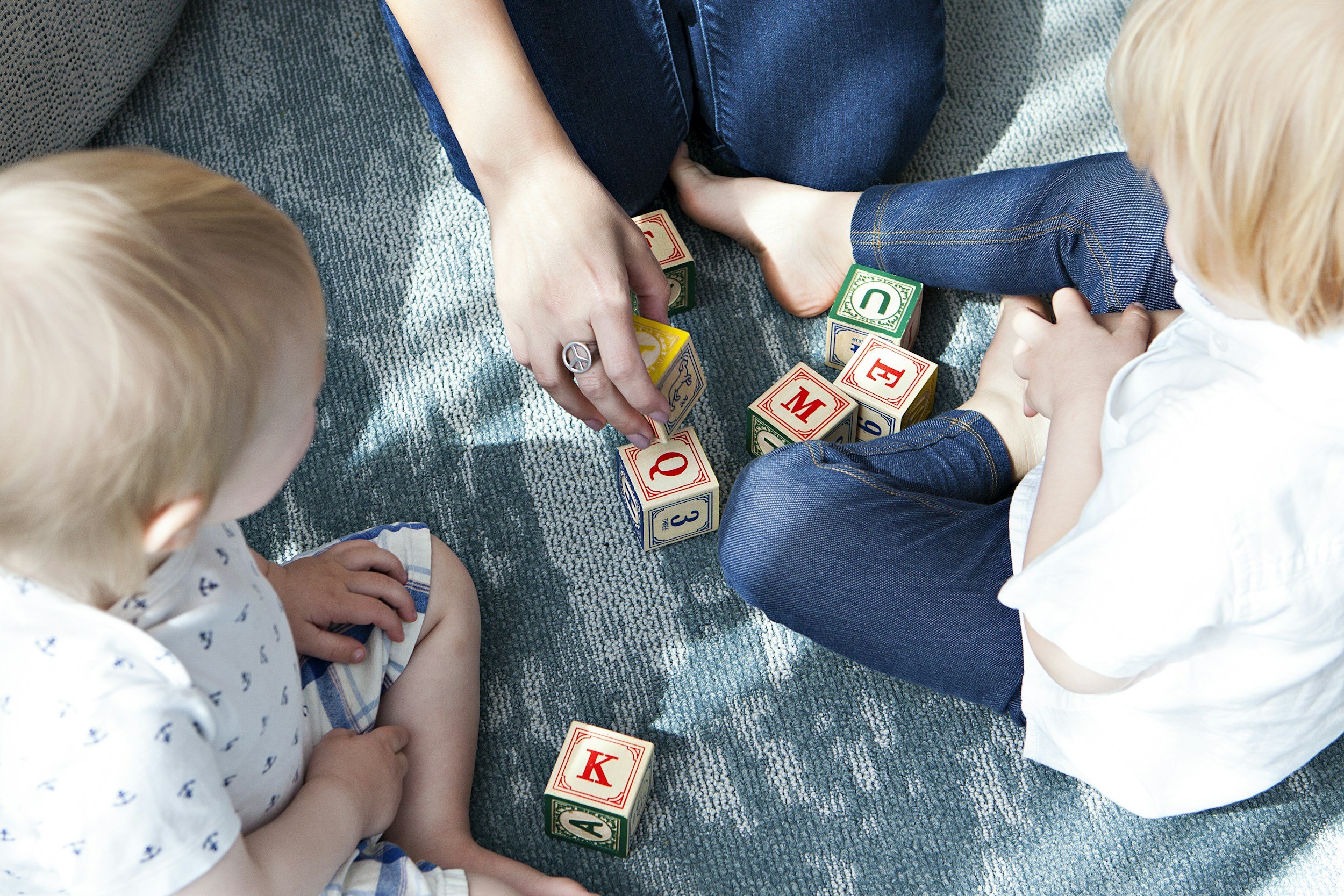
Counseling for Kids in St. Louis City & County
Everyone belongs.
Everyone can bloom.
We want to help you feel confident in supporting your child without the fear that you’re contributing to their distress.
Families formed through adoption or foster care often face unique challenges, and at Bud to Bloom, we provide specialized support to help these families thrive. Our pediatric play therapy services are designed to address issues such as attachment, identity, and trauma, creating a safe space for children and teens to express themselves and heal.
For Children
Pediatric therapy can help your child:
Build trust in new relationships
Navigate their racial identity in the context of their foster/adoptive family
Express their emotions in safe and healthy ways
For Parents
We also provide support for you as a parent or caregiver, so you can:
Overcome the overwhelming, conflicting information you may get about supporting your child
Use tangible skills to create a smoother transition for you and your child
Let go of the pressure to make every interaction with your child “perfect”
Often, our foster and adoptive families are concerned that the idea of therapy may make their child feel punished, rejected, or left out - and it can make asking for help nearly impossible. We want to assure you that pediatric therapy instead creates opportunities for deeper connection, a playful bonding experience, and belonging for all.
Our compassionate approach ensures that every child and family member feels valued and supported on their journey to emotional well-being.
Frequently Asked Questions
-
Play therapy helps children:
Express feelings they cannot yet verbalize
Build emotional regulation skills
Reduce anxiety and stress
Improve social skills
Process trauma safely
Strengthen problem-solving abilities
Through developmentally appropriate activities, children learn healthy coping skills and gain confidence in navigating challenges at home and school.
-
Play therapy has the most research support for children ages 3-13. More studies are showing it also helps younger children and teens. Our team is especially trained to work with kids and teens from 0-18. We use creative, age-appropriate approaches to help each child feel understood, build coping skills, and grow with confidence. Getting support early can help children build strong emotional health for the future.
-
Traditional counseling relies heavily on spoken discussion. Young children often haven’t developed the language skills to explain complex emotions (which is normal). Play therapy meets children at their developmental level by allowing them to communicate through toys, art, storytelling, and imagination. This makes pediatric play therapy far more effective for younger kids than talk therapy.
-
Every child is different, so there isn’t a set timeline for therapy. Some children benefit from short-term support around a specific challenge while others work with a therapist for several months or years as they build new skills and process more complex experiences. At Bud to Bloom, we regularly check in on your child’s progress and adjust goals together. Our hope is always to provide the support your child needs while helping your family feel confident continuing that growth beyond therapy.
-
Play therapy can support children with autism by:
Encouraging social interaction at their own pace
Building emotional awareness
Identifying communication needs and strengthening skills
Practicing flexibility and problem solving
Working with the unique strengths of their brain
Developing self-acceptance and self-esteem
-
Play therapy is especially effective for trauma because it allows children to process overwhelming experiences symbolically rather than reliving them verbally. Trauma-informed pediatric therapy reduces symptoms such as nightmares, hypervigilance, and emotional outbursts.
-
Yes, play therapy supports children struggling with separation anxiety by gradually building confidence, teaching coping skills, and helping them process fears related to attachment and safety.
-
Most children attend weekly sessions that are 45 minutes long. Weekly pediatric therapy allows emotional skills and trust to build steadily while maintaining momentum.
-
Yes, play therapy is supported by decades of research and is recognized by the Association of Play Therapy as an evidence-based mental health treatment for children. Research shows it is effective for anxiety, trauma, behavioral concerns, ADHD, Autism, and depression.
-
Your child may benefit from play therapy if you notice:
Frequent meltdowns or intense emotions
Withdrawal or sadness
Excessive worry or fears
Aggressive behavior
Difficulty adjusting to divorce or family changes
Regression (bedwetting, new clinginess)
School refusal
Identity questioning
Early support can prevent concerns from becoming more severe.
-
Yes, play therapy for anxiety helps children identify fears, practice coping skills, and build resilience. Through structured play, children learn relaxation strategies and gain a sense of control over anxious thoughts.
-
Yes. Children experiencing depression may struggle to verbally express sadness. Play therapy allows them to safely explore emotions, rebuild self-esteem, and reconnect with joy through guided activities and relationship-building.
-
Yes, parent involvement in play therapy is essential. Therapists provide parent consultations and coaching to ensure strategies are reinforced at home. Family support greatly enhances therapeutic outcomes.
-
When talking about therapy with your child, keep it simple and positive.
You might say: “Sometimes kids have big feelings and there’s a special helper who uses toys and games to help kids feel better.”
Present therapy as a supportive and safe experience, not a punishment.
-
Many insurance plans cover play therapy. Bud to Bloom Play Therapy is out of network with insurance companies, but we can provide a superbill for potential reimbursement by your insurance provider.
Other Play Therapy Services

Teen Therapy in St. Louis
Our teen therapy in St. Louis provides a supportive, judgement-free space where adolescents can process emotions, navigate identity, and build resilience during a time of major transition.

Family Therapy in St. Louis
Our family therapy helps strengthen connection and understanding. Whether your child or teen is struggling with behavior, or you’re noticing patterns from your own upbringing showing up in parenting, we help you move forward with clarity and connection.

Therapy Groups in MO
Our therapy groups in St. Louis provide a structured, supportive environment where children, teens, and caregivers can build confidence, strengthen relationships, and develop lifelong skills.
Meet Our St. Louis Child Therapists
Our therapists are passionate, playful, non-judgmental supports for your child, teen, and the whole family. We’re on your side, and we can’t wait to meet you!




Get Therapy Support for Your Child in St. Louis Today
To get started with pediatric play therapy and counseling for kids, reach out. Our Intake Coordinator will guide you through the process to meet with a child therapist in St. Louis.