
How to Talk To Your Child About Starting Play Therapy in St. Louis
Starting therapy can bring up a lot of emotions for parents. You might feel nervous about how your child will react, unsure of what to say, or worried about saying the “wrong” thing. At Bud to Bloom Play Therapy, we understand how important this conversation can feel.
We also believe parenting doesn’t require perfect scripts. What matters most is helping your child feel safe, supported, and informed. With honest and age-appropriate communication, you can help your child feel more comfortable about starting play therapy.
In this blog, we’ll talk through how to discuss starting therapy, what to avoid, and ways to help your child feel prepared before their first appointment at our St. Louis play therapy office.
Timing Matters When Talking About Therapy
Every child is different, so there is no perfect time to bring up therapy! Some children do best when they have a week or so to process the idea. Other children, especially kids with anxiety, may feel overwhelmed if they have too much time to worry beforehand and benefit from only a few days of processing.
For many families in the St. Louis area, we recommend introducing the conversation anywhere from a few days to one week before the first session.
It’s also helpful to choose a calm moment. Try not to bring up therapy during a meltdown, argument, or stressful situation. Instead, talk when your child feels regulated and connected to you.
Some parents find it easier to talk while doing something comforting together, such as:
Going out for ice cream
Taking a drive together
Coloring or drawing
Going on a walk in the neighborhood
Snuggling before bedtime
Children often open up more when they’re engaged in an activity instead of sitting face-to-face for a serious conversation.

Start with Curiosity and Questions
Before explaining what play therapy is, it can help to ask what your child already knows. Some children may have heard about counseling at school, seen therapy on TV, or know a child who talks to a counselor.
You might ask:
Questions You Can Ask Your Child
Have you heard of play therapy before?
What do you think happens in therapy?
Do you know anyone who talks to a counselor?
What questions do you have about it?
Their answers can help you understand if they’re feeling confused, nervous, embarrassed, or even excited.
Many children worry therapy means they’re “bad” or “in trouble.” This is why it’s important to explain that therapy is simply a place where children can get support with feelings, worries, behaviors or hard experiences.
You can reassure them by saying things like:
Lots of kids go to therapy.
Therapy is a safe place to talk and play.
You’re not in trouble.
Avoid Shame or Guilt Around Therapy
When parents are overwhelmed by behaviors at home, it can be tempting to frame therapy around what needs to “stop.” However, focusing too heavily on behaviors can unintentionally create shame.
Instead of saying:
You need therapy because you keep acting out.
You have to learn how to behave.
The therapist is going to fix this.
Try saying:
We noticed you’ve been having a hard time lately.
We found someone who can help with those big feelings.
You deserve support.
Children can be quite sensitive to tone and wording! If therapy is introduced as a punishment, they may begin the process feeling defensive or unsafe.
At our St. Louis pediatric play therapy practice, we encourage parents to save concerns about behaviors, stress, and parenting struggle for the intake and parent consultations instead of discussing them in front of the child.

Use Developmentally Appropriate Language
Children understand therapy differently depending on their age and developmental stage. Honest and simple language works best.
Talking to Younger Children About Play Therapy
Younger children may not fully understand words like “doctor” or “therapist.” Instead of focusing on titles, explain what the person does.
You could say: “I found someone who helps kids with big feelings. You’ll get to play, explore, and spend time with them once a week. How does that sound?”
Or: “This is a special place where kids can play and talk about feelings when they want to.”
It’s important to not trick children into therapy by saying you’re “just going to play” without explaining the purpose. Children deserve honesty in ways they can understand.
Talking to Older Kids and Teens
With older kids, who may know about therapy, it’s important to be direct and respectful.
You might say: “We noticed things have felt stressful lately, and we want to make sure you have support, too.”
Or: “Therapy can help teens understand their feelings, relationships, stress, and emotions better.”
Giving older children time to process can help them feel more in control of their experience. Some teens may even want input when choosing a therapist or setting goals for therapy.
Examples of goals teens may have for therapy include:
Managing anxiety
Feeling less angry
Making friends more easily
Handling school stress
Coping with divorce or family changes
Building confidence
Explain What Play Therapy Actually Looks Like
Many parents in St. Louis search for “play therapy near me” because they know traditional talk therapy may not work best for younger children. But parents and children often don’t know what play therapy means.
A free consultation call with one of our Client Care Coordinatorscan help you feel confident in explaining how play therapy is different from sitting across from a therapist answering questions.
At Bud to Bloom Play Therapy in St. Louis, children communicate through play, creativity, movement, and connection.A play therapist may use toys, art, games, pretend play, sand trays, or storytelling to help children and teens express emotions safely.
Some children talk a lot in sessions. Others may communicate through play first. Both are completely normal!
You might tell your child:
“You don’t have to share anything before you’re ready.”
“You can play while getting to know your therapist.”
“Your therapist will help you feel safe and comfortable.
This can help reduce pressure before the first session.
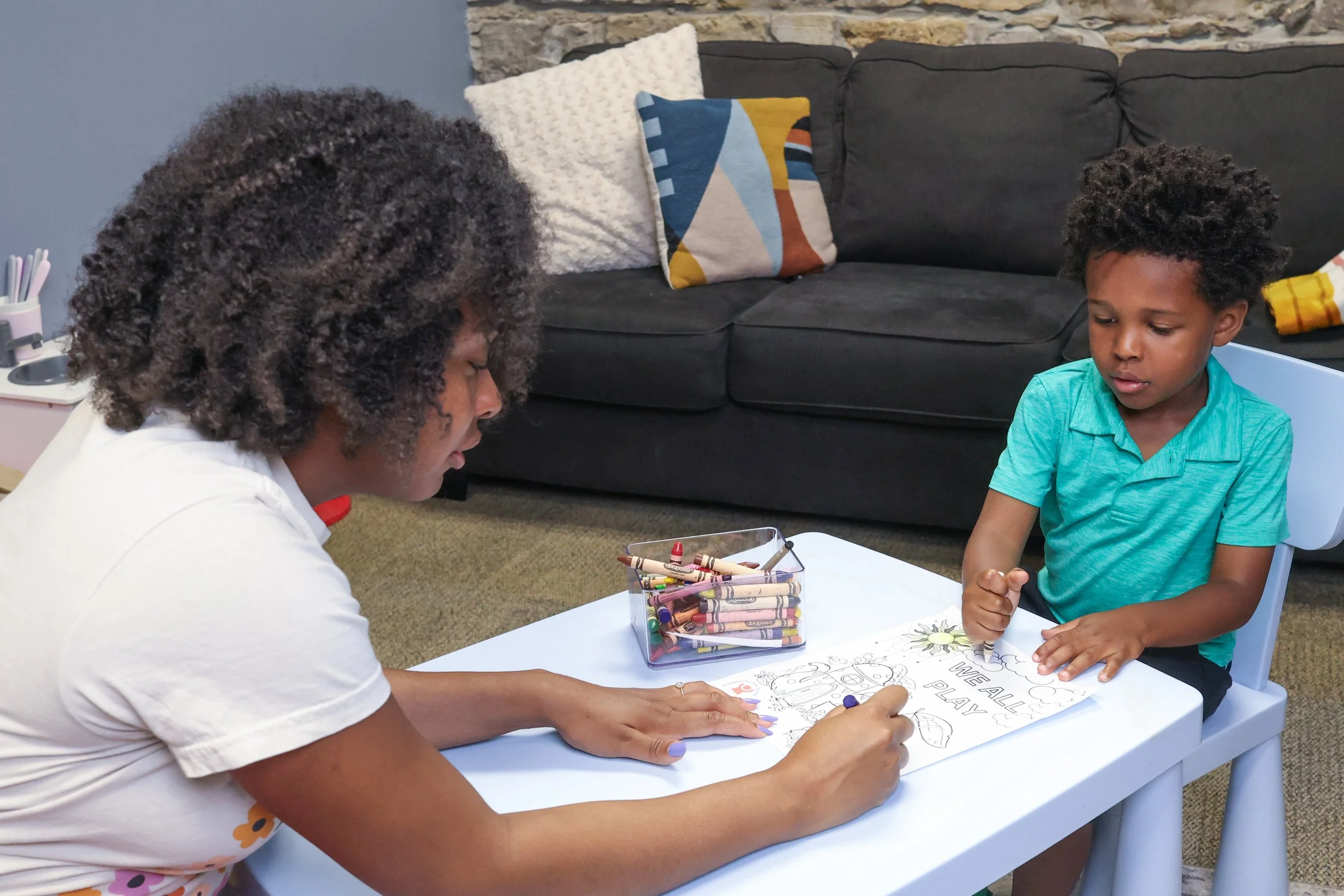
We Help Children Feel More Comfortable Before Their First Visit
Starting something new can be scary for any of us, especially children! That’s why we provide a social storyto families who schedule with our office.
A social story is a short document designed to help children know what to expect before coming to therapy. It includes:
Pictures of their therapist
Photos of our St. Louis office and playrooms
Simple sentences explaining what therapy may look like
Reassuring information about the first visit
For example, a social story may say:
“Sometimes my parents may see the play therapist with me. Sometimes I may see the play therapist by myself.”
“There are toys to play with and other things to do at Ms. Jasmine’s office. I can play with the toys, games, and art materials.”
“Ms. Rachelmay talk to me. I can talk to her and that’s okay. I don’t have to talk to Ms. Rachel, and that’s okay too. I can go to the play therapist’s office and not feel nervous.”
Many children feel more relaxed when they can preview the space ahead of time. Seeing photos of the office, toys, and therapist can make the experience feel more predictable and less overwhelming.
Focus on Building Safety and Trust
The first several play therapy sessions are often focused on relationship building. Your child may feel shy, uncertain, quiet, silly, or even resistant at first. That’s all normal!
Trust takes time. (That’s part of why we start with weekly sessions.)
At Bud to Bloom Play Therapy, we don’t force kiddos to discuss difficult experiences before they’re ready. Instead, we meet children where they are and allow the therapeutic relationship to develop naturally.
Children make progress when they feel emotionally safe!
That means:
No pressure to perform in therapy
No forced conversations
No expectation to open up immediately
Space to explore emotions through play
Play therapy allows children to process emotions in ways that match their developmental level. For many children, play feels safer than direct questioning.
Therapy is Support, Not Punishment
One of the most important messages your child can hear is this:
Play therapy is a place for support, not punishment.
Children who understand this are often more open to the process. Even if they feel nervous, they can begin therapy knowing they’re entering a caring and supportive environment.
As parents, you don’t need to have every answer before beginning therapy. Let’s be real–you just won’t. You simply need to help your child feel loved, supported, and safe enough to try something new!
If you’re looking for pediatric play therapy in St. Louis, Missouri, our team of child and teen therapists is here to help children and families navigate emotions, behaviors, anxiety, trauma, and life transitions with compassion and connection.
